Ramón: the seed that holds a food memory
From Maya home gardens to flour today, ramón shows that food security can also grow on a living tree.
From a small fruit to flour
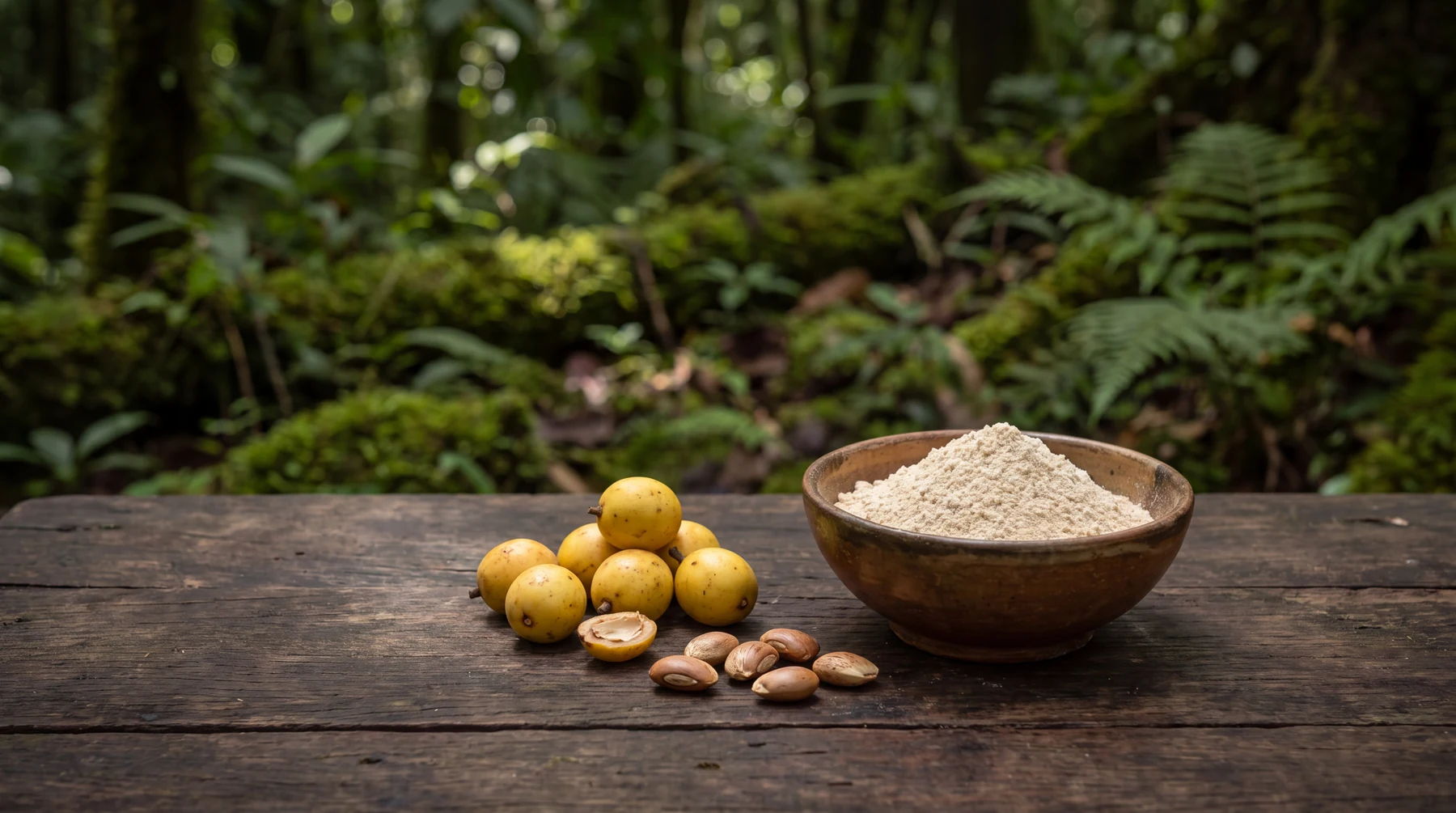
The fruit of ramón is easily missed beside the size of its tree. Beneath the fleshy portion lies a seed eaten cooked, dried, roasted or milled. Turning it into flour changes its keeping life, flavour and the ways it can enter drinks, breads and other foods. Its value lies not just in gathering a wild resource but also in knowing how to process it well.
A study of ramón seeds and flours found roughly 10 to 12% protein in dry samples, along with carbohydrates and other constituents that vary with processing. This is a useful food, not a complete meal on its own or a cure. Calling it a “superfood” may draw attention, but it can erase the labour of harvesting and preparation, and turn laboratory measurements into promises the study never made.
What we know of the Maya — and what we do not
In Yaxunah, Yucatán, Maya speakers today recognise ramón among the foods used during scarcity. World Agroforestry records the use of its seeds for bread when maize stocks run low. Research published in Ancient Mesoamerica connected that knowledge with home gardens and cultivated sinkholes, where several species provide alternatives if a harvest fails. The strength of this system lies in diversity, not in one solitary saviour tree.
The same study cautions against a claim repeated too confidently: that ramón was a universal staple throughout ancient Maya civilisation. Archaeological evidence varies among sites and periods, and remains of this species are absent from some contexts. Absence does not erase present-day uses; present-day uses do not prove one diet across centuries of history. The memory of ramón becomes richer when heard without turning it into myth.
A resource growing with the forest
Food security depends on more than the calories in a seed. Who can access the tree? Who knows the harvest season? How is the product stored? Will the forest that supports it remain? Projects in Guatemala’s Maya Biosphere Reserve have studied ramón markets alongside forest conservation because separating those questions yields incomplete solutions.
The Maya Nut Institute has worked with rural communities, especially women, on training in collection, processing and food uses. In Nicaragua it documents women’s ojoche cooperatives and a seed-based cereal supplied to school-meal programmes. A flour can expand income and food choices without cutting down the tree that produces it. But that outcome depends on local organisation, fair markets and sustainable harvests; it does not follow automatically from declaring a species valuable.
Looking at a young tree is looking ahead
The Chachagua individual is still presented as young. Its crown raises a decisive question: what must happen for a young tree to become part of a forest that can feed people? It needs time, soil, relationships with other organisms and protection from decisions that value only immediate gain.
Ramón joins two scales often kept apart: a seed that fits in a hand and a canopy that takes years to build. Between them lies the knowledge of people who have learned to eat from a diverse landscape without exhausting it. That may be its most substantial contribution to discussions of food crises: not a miraculous promise, but a possibility that lives while tree and community can keep growing.
Sources and further reading
Original synthesis based on the following publications.
- Kew · Brosimum alicastrum: taxonomía y distribución
- Ancient Mesoamerica · Famine Foods and Food Security in the Northern Maya Lowlands
- Food Science & Nutrition · Nutritional Value, Antinutritional Factors, and Protein Quality of Brosimum alicastrum Seeds
- University of Minnesota · Ramón Project in the Maya Biosphere Reserve
- Maya Nut Institute · Programas comunitarios
- World Agroforestry · Brosimum alicastrum: usos alimentarios
- Maya Nut Institute · Mujeres productoras y alimentación escolar en Nicaragua