
Before synthetic foam, there was the ceiba
Fiber from its fruits kept aircrews and sailors afloat long before synthetic foams came to dominate life jackets.
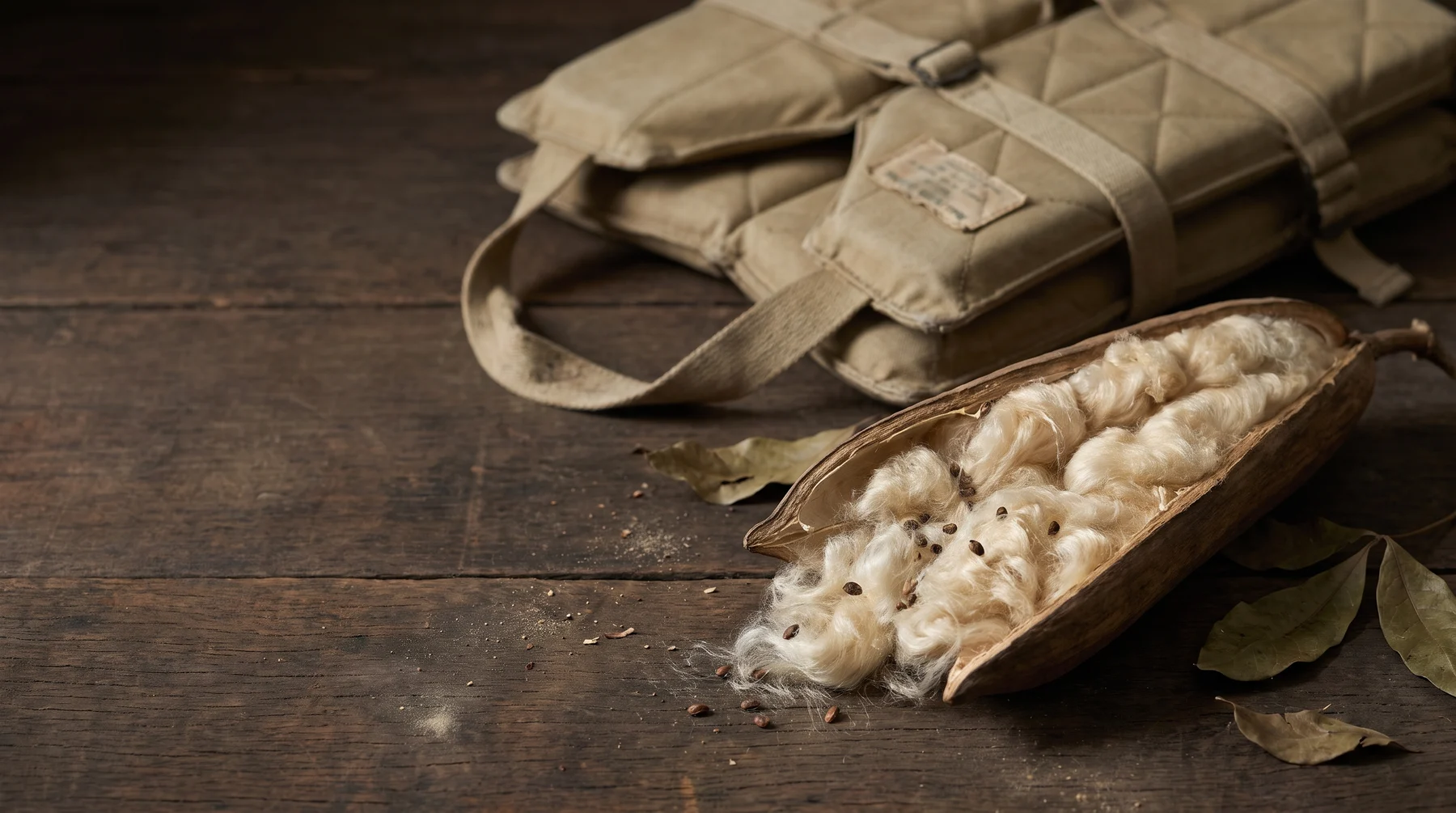
A capsule full of air
Inside a ripe ceiba fruit, small seeds are surrounded by pale, silky fiber that is almost as light as it looks: kapok. When the capsule opens, this material leaves the protection of the crown and meets the wind. The same fiber associated with seed dispersal became part of a very different human story: staying afloat.
Its lightness and resistance to wetting made kapok a valuable filling. It was used in pillows, mattresses and life jackets. The crucial property for the latter belonged to the fiber; the iodine value of the seed oil describes a different material and does not explain why a life jacket floats.
From fruit to survival equipment
During the Second World War, kapok was used in survival equipment for some aircrews. A life jacket preserved by the Smithsonian makes that transformation tangible: cotton tubes filled with plant fiber, assembled into panels, formed a garment intended to support a person in the water.
The object also shows that a buoyant material was not enough on its own. The jacket was bulky, and the distribution of buoyancy could encourage a dangerous position with the wearer’s face in the water. Design decisions separate a fiber that floats from equipment that protects.
The limits of a natural fiber
Kapok had an industrial life beyond life jackets: stuffing, insulation and other applications made use of its properties. Its limitations mattered too. Oil in the water could reduce its effectiveness in flotation equipment, a particularly serious vulnerability in shipping accidents.
As synthetic materials became widespread, the fiber lost ground in that application. Replacement does not erase the earlier history: for decades, part of the safety equipment industry depended on harvesting fruits, separating seeds and preparing a filling that came from a tropical tree.
Looking at the ceiba again
In Costa Rica, recognizing a ceiba often begins with the size of its trunk, its buttresses and the breadth of its crown. Kapok adds another scale to that view: the fruit. A small structure, easily overlooked beside an enormous tree, connects its reproduction to the history of everyday objects.
The next time an open capsule reveals its fibers, it is worth pausing. Here is the material that other hands gathered, processed and stitched into beds, cushions and life jackets. Before it became an industrial filling, it was part of the life of a ceiba.
Sources and further reading
Original synthesis based on the following publications.