
One photograph is not enough: the story behind a tree’s name
Naming a tree means gathering clues, acknowledging limits and leaving room for correction.
The first name
Someone looks at a tree and asks what it is called. The answer may sound like a single word, but behind it is often a chain of observations. First comes a familiar silhouette. Then doubts appear: a leaf resembles another species; the bark does not quite match; flowers or fruit are missing. In dendrology, naming is not simply attaching a label at the end of a walk. It is building a hypothesis from features that can be examined again.
A common name starts a conversation. It may change across regions, people and trades; one tree may have several. A scientific name attempts to place the species within a shared classification, but it is not written in stone either. Research can redraw its boundaries or show that a population needs different treatment. An up-to-date taxonomic source helps us follow those changes without mistaking a revised name for the disappearance of the organism it names.
What a photograph can establish
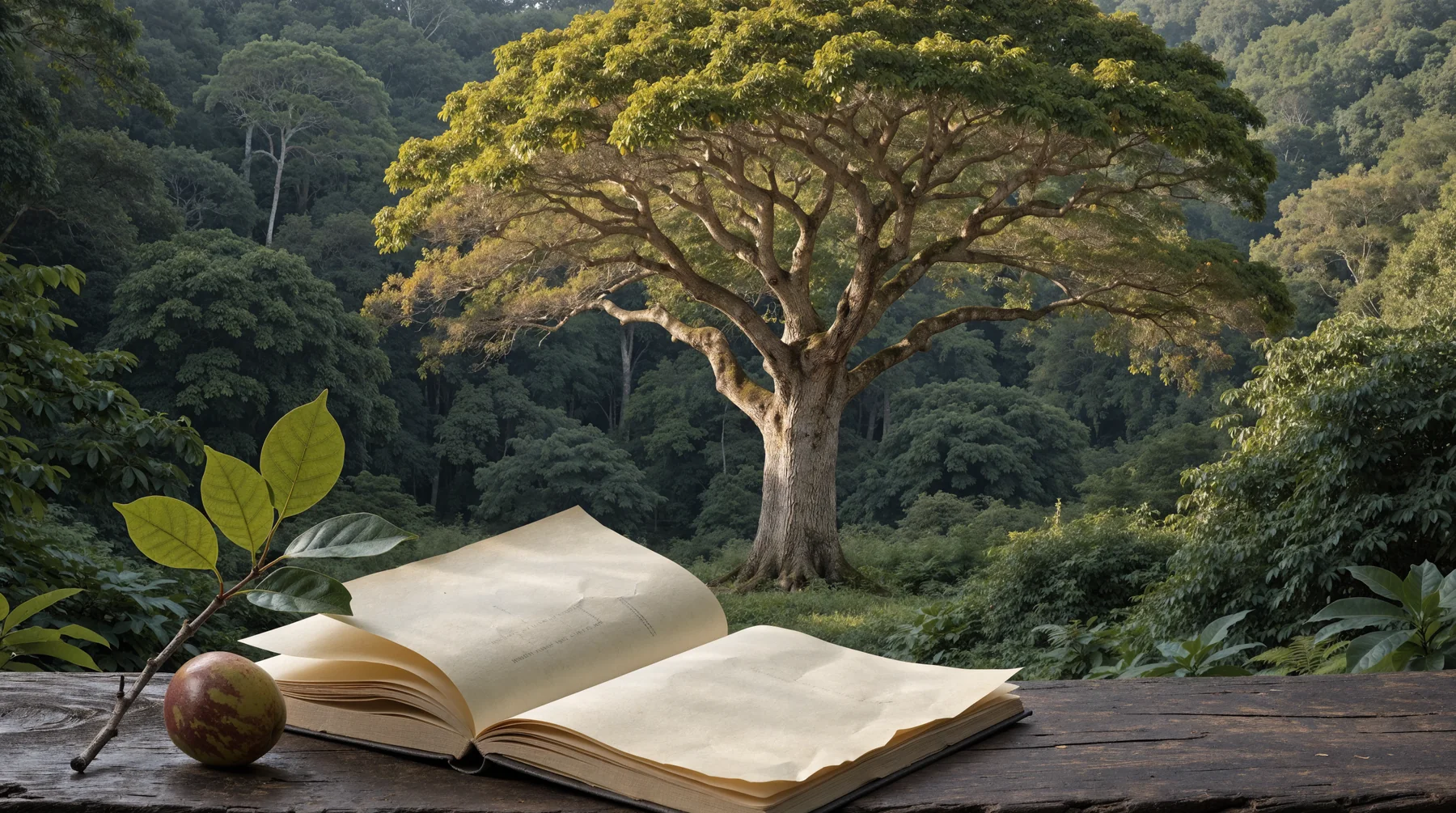
A good photograph of an entire tree preserves its architecture: base, main stem, branches and crown. Other images show how leaves are arranged, an open flower, a fruit or the texture of bark. Each frame provides a different kind of evidence. The wide view lets us return to the individual in its landscape; the close view lets us compare characters that look identical from afar. No photograph, however sharp, can reveal features left outside the frame.
Sometimes a set of images supports a persuasive identification. At other times it honestly takes us only as far as a genus or family. Saying “we do not yet know” does not weaken a record; it marks the boundary of available evidence. A photograph without a date or place also loses part of its value. Knowing when and where a tree was observed helps us check its range, reproductive season and the possibility of studying it again.
Comparison is part of looking
Identification means looking for similarities, but especially for differences. Two trees may share a rounded crown and grow in the same valley; their leaves might differ in how they arise from the stem, at the margin, in their veins or on the underside. A flower can resolve a doubt that bark could not. Field guides, herbaria and botanical checklists therefore work best as partners in observation, not machines for instant answers.
There is also a very human temptation to make an individual fit the first plausible name. If a character contradicts the identification, it is better to keep that discomfort than erase it. Recording alternatives and returning when the tree has flowers or fruit can turn an incomplete record into a strong one. Waiting is part of the method in a science of long-lived organisms.
A record that can keep growing
A botanical record brings together a name, a family, a place and a description, but its value does not depend on being complete the day it is published. It can grow with a new observation, a better image or a taxonomic correction. What matters is that each change remains clearly connected to the observed tree and to the evidence behind it. The archive need not pretend to a certainty it lacks; it can show how knowledge was reached.
That is why it is worth photographing an isolated tree, moving close to its details without losing the overall view, and noting what is still missing. A well-documented individual allows someone else to check, compare and continue. Perhaps that is the best way to honour a name: use it to look more precisely, not to stop looking.
Sources and further reading
Original synthesis based on the following publications.