
The almendro and lightning: how a storm can favour a giant
Electrical resistance, competition from lianas and the importance of old almendros for the great green macaw.
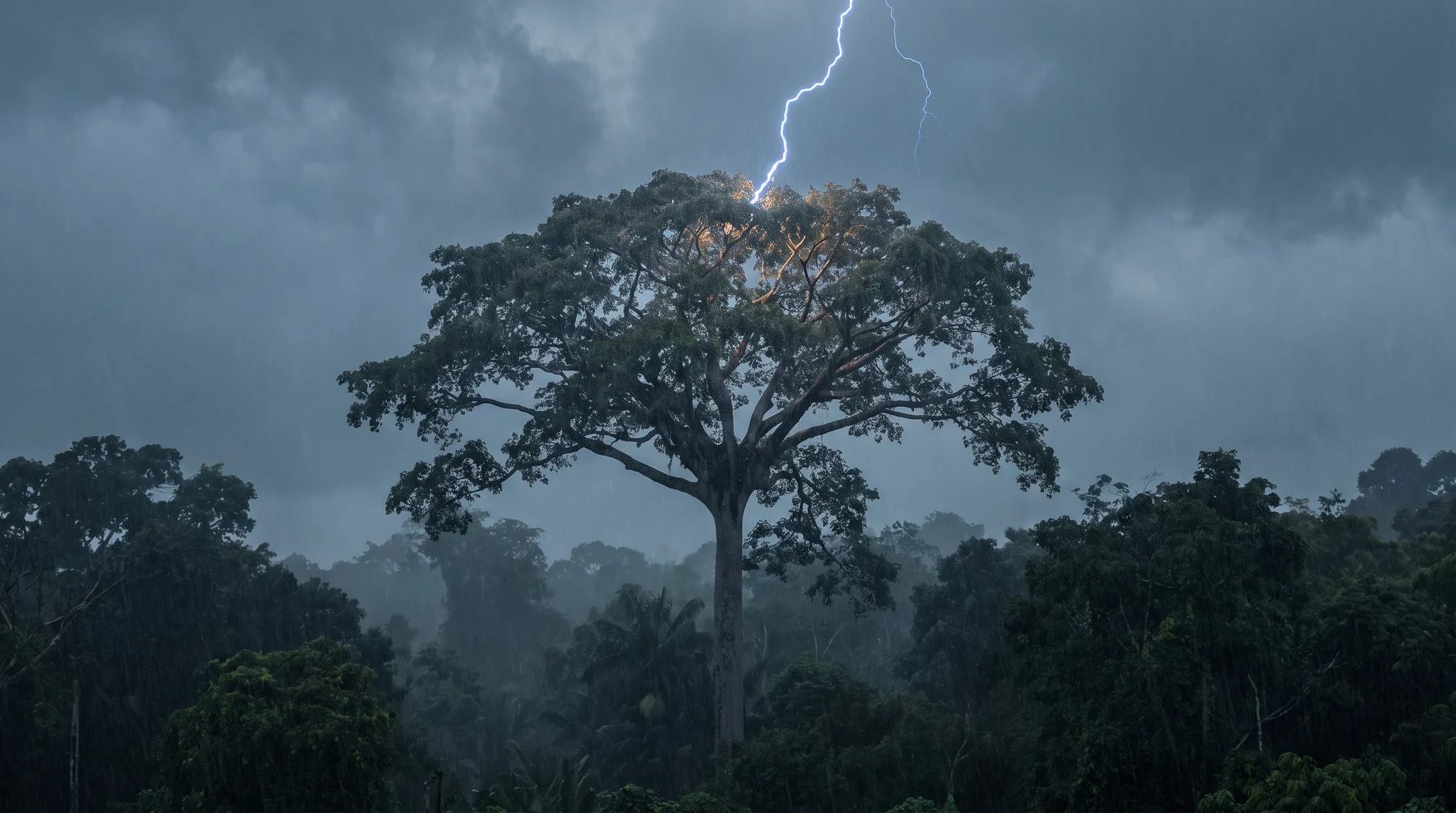
A storm changes the competition
In a tropical forest, growing above your neighbours comes at a cost: a crown exposed to sunlight is also exposed to storms. For Dipteryx oleifera, Costa Rica’s almendro de montaña, that position can offer an unexpected advantage. Some individuals survive strikes that kill part of the vegetation competing with them.
At Barro Colorado, Panama, researchers followed nine almendros that received ten direct lightning strikes. All survived with little damage. The strikes, however, killed 78% of the associated lianas and some neighbouring trees. Published in New Phytologist in 2025, the finding shows how one disturbance can harm certain plants while favouring others.
Electricity inside a tree
The explanation may lie in how electricity moves through a tree. Plant tissues contain water and ions that conduct current. Electrical resistance varies between species and with trunk characteristics. For the same current, lower resistance produces less heating: a possible reason why some trees suffer less damage.
Earlier research measured these properties and developed models linking them to lightning effects. Large almendros showed particularly low resistance. This is a candidate explanation for their tolerance, although no single mechanism has yet been established to account fully for their survival.
Fewer lianas, more resources
Survival is only part of the advantage. Lianas root in the ground and climb trees to reach the canopy. There they spread leaves over crowns and compete for resources. Their presence can reduce both tree growth and reproduction.
An independent experiment in Panama helps put that competition into perspective. Five years after lianas were removed from experimental plots, there were 150% more canopy trees bearing fruit than in plots where lianas remained. This helps explain why losing lianas can matter long after a storm ends: it changes the resources available for leaves, flowers and seeds.
One almendro, three nests in Sarapiquí
In Costa Rica, the persistence of a large almendro also matters to animals. Its fruit feeds great green macaws, and its cavities can house nests. On a Sarapiquí farm, Macaw Recovery Network documented one almendro with three nests during the 2020 breeding season. Of seven chicks that hatched, six fledged. A single tree made a tangible contribution to the birds’ next generation.
This relationship explains why planting almendros and protecting adults are complementary tasks. A young tree can grow and begin fruiting long before developing the large cavities a macaw needs for nesting. Restoration prepares future resources; old trees maintain resources that already exist.
The lightning discovery adds another dimension to that longevity. A large almendro survives disturbances, changes the competition around it and continues supporting other lives. Its importance accumulates over years, branch by branch, fruit by fruit and nesting season after nesting season.
Sources and further reading
Original synthesis based on the following publications.
- Gora et al. (2025) · How some tropical trees benefit from being struck by lightning
- Gora et al. (2017) · Effects of lightning on trees: a predictive model based on in situ electrical resistivity
- García León et al. (2018) · Lianas reduce community-level canopy tree reproduction
- Macaw Recovery Network · Un almendro con tres nidos en Sarapiquí
- Macaw Recovery Network · Seeds, Saplings, and Sowing