Enterolobium cyclocarpum
Enterolobium cyclocarpum
- Common name
- Guanacaste
- Scientific name
- Enterolobium cyclocarpum
- Genus
- Enterolobium
- Family
- Fabaceae
- Location
- Parque de Jiménez, Pococí, Limón
- Elevation
- 234 m
Natural history
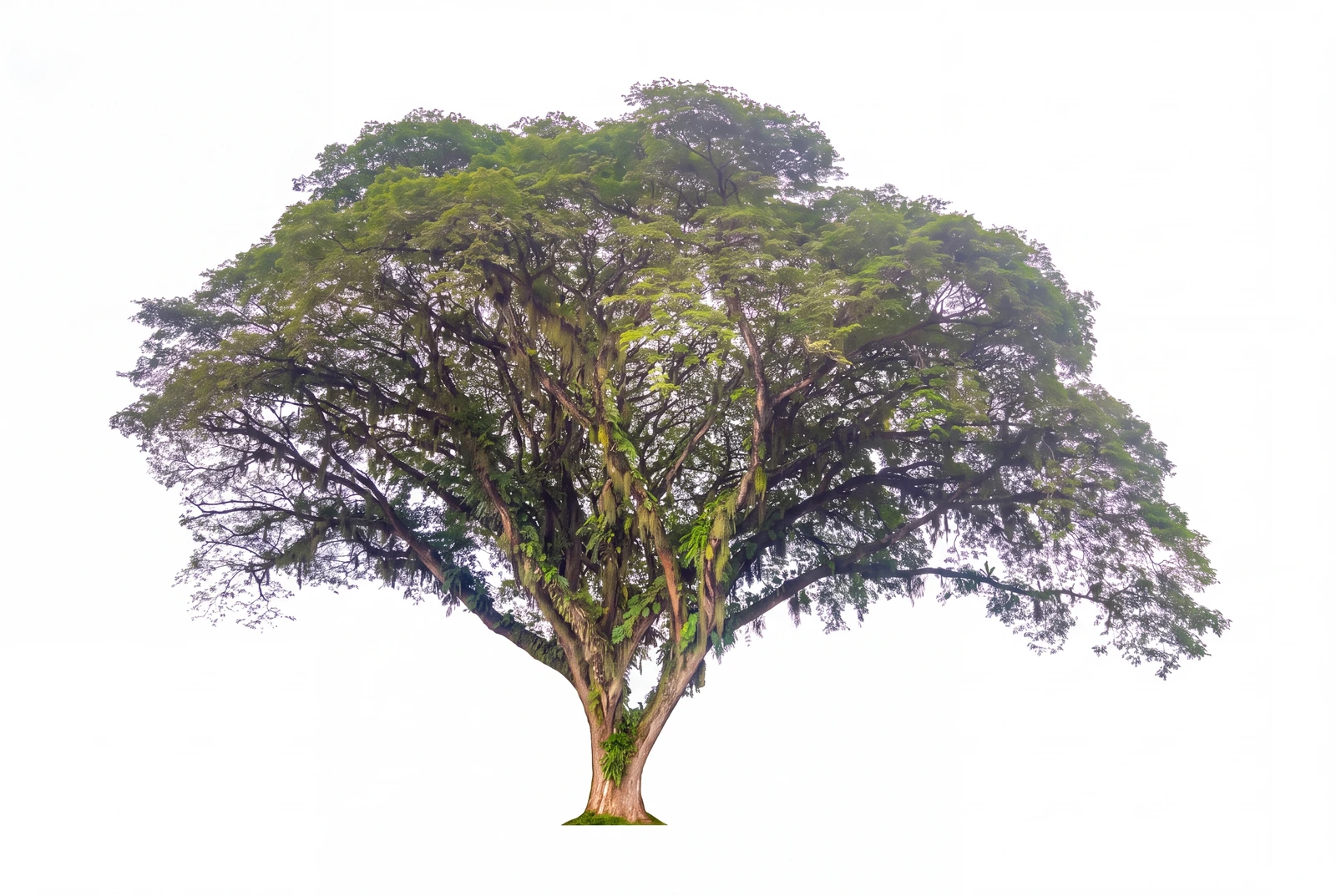
Enterolobium cyclocarpum, the guanacaste, is Costa Rica's national tree and belongs to Fabaceae. It is known for its wide, low, umbrella-shaped crown, which shades an area far larger than its trunk, and for its woody pods, curled almost into a ring in the shape of an ear. It grows from sea level to about 1,200 m and tolerates the dry season well, which is why it is so common as a lone tree in the country's pastures.
The individual at the park in Jiménez, Pococí, shows that silhouette over a public square. On the Caribbean slope, where humidity stays high almost all year, its bark also supports a community of epiphytes visible to the naked eye: bromeliads, hanging cacti and ferns that germinate and grow without touching the ground, using the guanacaste as support, not as food.
That architecture — a wide crown, rough bark, heavy curled pods — raises an older question: who are those pods made for? The library explores a hypothesis that links the guanacaste to animals that no longer exist.